
Exploring the Diverse Hexapoda Subphylum
The subphylum Hexapoda represents one of the most diverse and successful groups of organisms on Earth, encompassing a vast array of species that have adapted to nearly every conceivable habitat. This subphylum is characterized by its members possessing six legs, a trait that is foundational to their classification. Hexapods include insects, which are the most numerous and varied group within this subphylum, as well as other less familiar groups such as springtails and bristletails.
The evolutionary success of Hexapoda can be attributed to their remarkable adaptability, complex life cycles, and intricate behaviors, which have allowed them to thrive in environments ranging from the deepest caves to the highest mountains. Hexapods are not only significant in terms of their numbers but also in their ecological roles. They play crucial parts in various ecosystems, serving as pollinators, decomposers, and prey for numerous other animals.
The study of Hexapoda is essential for understanding biodiversity and the intricate web of life on our planet. As we delve deeper into the characteristics and behaviors of these organisms, we uncover the complexities that contribute to their survival and proliferation across diverse environments.
Key Takeaways
- Hexapoda is a subphylum of arthropods that includes insects and their close relatives, characterized by having six legs and three body segments.
- Hexapoda has evolved into a diverse group of organisms, with over a million described species and an estimated 10 million total species, making them the most diverse group of organisms on Earth.
- The morphology and anatomy of hexapods vary greatly, but they generally have a head, thorax, and abdomen, as well as specialized appendages for feeding, sensing, and locomotion.
- Hexapoda play a crucial role in ecosystems as pollinators, decomposers, and food sources for other organisms, contributing to the overall health and balance of ecosystems.
- Behavioral adaptations of hexapods, such as migration, communication, and social organization, have allowed them to thrive in a wide range of environments and ecological niches.
Evolution and Diversity of Hexapoda
The evolutionary history of Hexapoda is a fascinating tale that dates back over 400 million years, with fossil evidence suggesting that they emerged during the Devonian period. The earliest hexapods were likely small, wingless creatures that inhabited terrestrial environments. Over time, they underwent significant evolutionary changes, leading to the development of wings in some lineages, which allowed for greater dispersal and colonization of new habitats.
The evolution of flight is considered one of the most critical adaptations in the history of Hexapoda, enabling insects to escape predators, find food sources, and exploit new ecological niches. Today, Hexapoda is divided into several major groups, including insects (Insecta), which alone account for over a million described species.
Each order exhibits unique adaptations and ecological roles, contributing to the overall diversity of the subphylum. For instance, beetles are known for their hard exoskeletons and diverse feeding habits, while butterflies are celebrated for their intricate life cycles and role as pollinators. This diversity is not merely a result of random chance; it reflects millions of years of evolutionary pressures that have shaped these organisms into highly specialized forms.
Morphology and Anatomy of Hexapoda
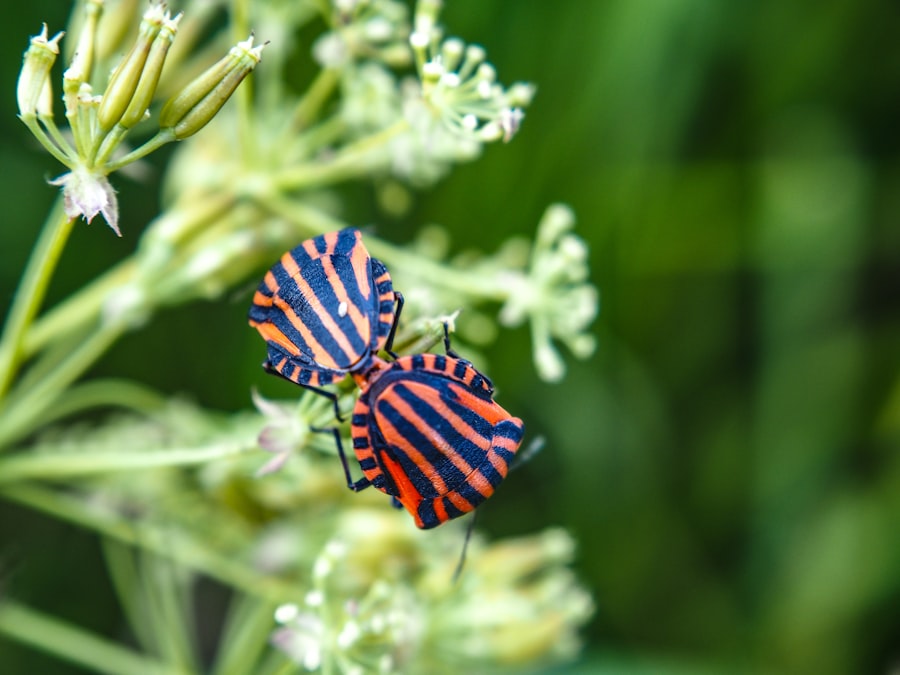
Hexapods exhibit a distinctive body plan that is divided into three primary regions: the head, thorax, and abdomen. The head houses essential sensory organs such as compound eyes and antennae, which are crucial for navigation and communication. The compound eyes provide hexapods with a wide field of vision and the ability to detect movement rapidly, while antennae serve as tactile sensors that help them interact with their environment.
The mouthparts vary significantly among different groups, adapted for specific feeding strategies—ranging from the piercing-sucking mouthparts of mosquitoes to the chewing mandibles of grasshoppers. The thorax is equipped with three pairs of legs, each adapted for various functions such as walking, jumping, or swimming. In many insects, the thorax also supports one or two pairs of wings, which are critical for flight.
The structure of these wings can vary widely; for example, the membranous wings of dragonflies differ significantly from the hardened forewings of beetles. The abdomen typically contains vital organs related to digestion and reproduction. In some species, it may also feature specialized structures such as stingers or ovipositors that aid in defense or reproduction.
Ecological Importance of Hexapoda
| Hexapoda Species | Ecological Importance |
|---|---|
| Bees | Pollination of plants |
| Ants | Seed dispersal and soil aeration |
| Butterflies | Pollination and indicator species for ecosystem health |
| Grasshoppers | Contribute to nutrient cycling and food for other animals |
Hexapods play an indispensable role in maintaining ecological balance across various ecosystems. As pollinators, many insects facilitate the reproduction of flowering plants by transferring pollen from one bloom to another. This process is vital for the production of fruits and seeds, which in turn supports a wide range of other organisms within food webs.
For instance, bees are well-known for their pollination activities; without them, many crops would suffer drastically reduced yields, leading to food shortages. In addition to pollination, hexapods contribute significantly to nutrient cycling through decomposition. Many species feed on decaying organic matter, breaking it down into simpler compounds that enrich the soil.
This process not only aids in nutrient recycling but also supports plant growth by enhancing soil fertility. Furthermore, hexapods serve as a food source for numerous animals, including birds, mammals, and amphibians. Their presence in ecosystems helps sustain higher trophic levels and contributes to overall biodiversity.
Behavioral Adaptations of Hexapoda
The behavioral adaptations exhibited by hexapods are as varied as their morphological traits. Many species have developed complex social structures that enhance their survival chances. For example, social insects like ants and bees exhibit cooperative behaviors that allow them to work together in building nests, foraging for food, and defending their colonies against predators.
These social structures are often governed by intricate communication systems involving pheromones and tactile signals that convey information about food sources or threats. In addition to social behaviors, hexapods display remarkable individual adaptations that enhance their survival. Camouflage is a common strategy employed by many species; for instance, stick insects mimic twigs or leaves to evade predators.
Others utilize warning coloration or mimicry to signal toxicity or unpalatability to potential threats. Behavioral adaptations also extend to reproductive strategies; some species engage in elaborate courtship displays or produce pheromones to attract mates. These behaviors not only ensure successful reproduction but also contribute to genetic diversity within populations.
Economic Significance of Hexapoda

The economic significance of hexapods cannot be overstated; they impact agriculture, medicine, and various industries in profound ways. In agriculture, beneficial insects such as pollinators play a crucial role in crop production. The economic value of pollination services provided by insects is estimated to be in the billions of dollars annually.
Conversely, some hexapods are considered pests that can cause significant damage to crops and livestock. Understanding their behavior and ecology is essential for developing effective pest management strategies that minimize economic losses while preserving beneficial species. Beyond agriculture, hexapods have also contributed to advancements in medicine and biotechnology.
For instance, certain insect venoms contain compounds with potential therapeutic applications; research into these substances has led to the development of new painkillers and anti-inflammatory drugs. Additionally, the study of insect behavior has inspired innovations in robotics and artificial intelligence. The flight mechanics of insects like fruit flies have informed the design of micro aerial vehicles capable of navigating complex environments.
Threats and Conservation of Hexapoda
Despite their resilience and adaptability, hexapods face numerous threats that jeopardize their populations and ecosystems. Habitat loss due to urbanization, agriculture, and deforestation poses a significant challenge for many species. As natural habitats are fragmented or destroyed, hexapods lose essential resources such as food and shelter, leading to declines in biodiversity.
Climate change further exacerbates these issues by altering habitats and disrupting life cycles; shifts in temperature and precipitation patterns can affect breeding seasons and food availability. Conservation efforts aimed at protecting hexapod diversity are crucial for maintaining ecological balance. Initiatives such as habitat restoration, sustainable agricultural practices, and public education about the importance of insects can help mitigate some threats they face.
Additionally, research into insect populations can provide valuable insights into ecosystem health; monitoring changes in hexapod diversity can serve as an early warning system for broader environmental issues.
Future Research and Exploration of Hexapoda
The future of hexapod research holds immense potential for uncovering new insights into biodiversity and ecological interactions. As technology advances, researchers are increasingly employing molecular techniques such as DNA barcoding to identify species and understand evolutionary relationships within this subphylum. This approach allows scientists to explore previously unrecognized diversity among hexapods and assess their roles within ecosystems more accurately.
Moreover, interdisciplinary studies combining ecology with fields like climate science will be essential for predicting how hexapod populations will respond to environmental changes in the coming decades. Understanding these dynamics will be critical for developing effective conservation strategies that ensure the survival of these vital organisms. As we continue to explore the vast world of hexapods, we may uncover new species with unique adaptations or discover novel applications for their biological properties that could benefit humanity in unforeseen ways.
Hexapoda, a subphylum of arthropods, is a fascinating group that includes insects, which are the most diverse group of animals on Earth. For those interested in exploring more about the vast diversity and characteristics of Hexapoda, a related article can be found on the Animal Kingdom website. This resource provides in-depth information about various animal classifications and their unique traits. To learn more, you can visit the article by clicking on this link: Animal Kingdom.
FAQs
What is the Subphylum Hexapoda?
The Subphylum Hexapoda is a taxonomic group that includes insects, characterized by having six legs.
What are some examples of Hexapoda?
Some examples of Hexapoda include ants, bees, butterflies, beetles, and grasshoppers.
What are the main characteristics of Hexapoda?
The main characteristics of Hexapoda include having three body segments (head, thorax, and abdomen), a pair of antennae, and three pairs of legs.
What is the ecological importance of Hexapoda?
Hexapoda play a crucial role in ecosystems as pollinators, decomposers, and as a food source for other animals.
How do Hexapoda reproduce?
Most Hexapoda reproduce sexually, with the females laying eggs that hatch into larvae or nymphs before developing into adults.
What are some adaptations of Hexapoda for survival?
Adaptations of Hexapoda for survival include flight, camouflage, mimicry, and the ability to produce chemical defenses.