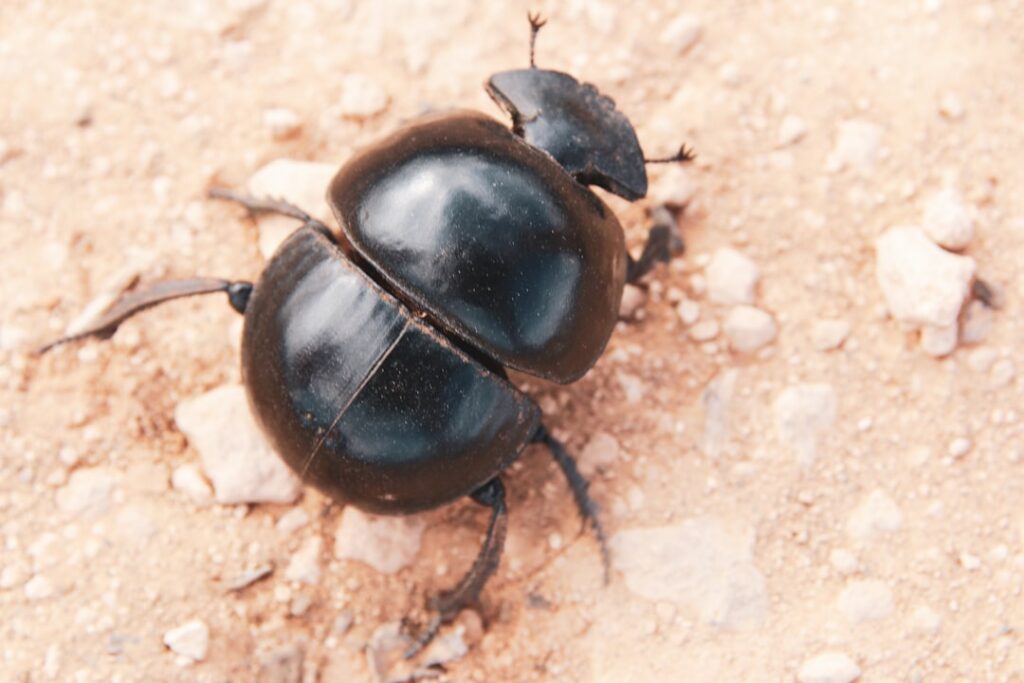
The Fascinating World of the Dung Beetle
Dung beetles, belonging to the family Scarabaeidae, are a fascinating group of insects that play a crucial role in various ecosystems around the globe. These beetles are primarily known for their unique behavior of feeding on and burying animal feces, which they utilize as a food source and breeding ground. With over 8,000 species identified worldwide, dung beetles exhibit a remarkable range of sizes, colors, and behaviors, making them a subject of interest for entomologists and ecologists alike.
The evolutionary adaptations of dung beetles are equally intriguing. Their strong legs and specialized mouthparts allow them to manipulate dung with impressive efficiency.
Some species are adept at rolling dung into balls, which they transport to their burrows for consumption or as a nursery for their young. This behavior not only aids in the decomposition of organic matter but also helps in the dispersal of seeds and nutrients throughout the soil. As such, dung beetles are often considered indicators of environmental health, reflecting the state of their habitats and the biodiversity within them.
Key Takeaways
- Dung beetles play a crucial role in ecosystems by recycling nutrients and improving soil health.
- Their life cycle includes unique behaviors such as rolling dung balls for feeding and breeding.
- There is a wide diversity of dung beetle species adapted to various environments worldwide.
- Dung beetles benefit agriculture by controlling pests and enhancing soil fertility.
- Conservation and ongoing research are vital to protect dung beetle populations and understand their ecological impact.
The Life Cycle and Behavior of Dung Beetles
The life cycle of dung beetles is a complex process that begins with the female laying her eggs in dung. Depending on the species, a single female can lay anywhere from a few dozen to several hundred eggs in a single dung pat. Once the eggs hatch, the larvae feed on the nutrient-rich feces, which provides them with the necessary sustenance to grow and develop.
This larval stage can last from a few weeks to several months, depending on environmental conditions and species-specific traits.
Some species are known as “rollers,” which roll dung into spherical shapes that they transport away from the original source.
This behavior not only helps them secure food but also reduces competition from other scavengers. Other species, termed “tunnellers,” dig burrows directly beneath dung pats to store food and lay eggs. This behavior is particularly advantageous in environments where dung is scarce, as it allows them to access resources that might otherwise be consumed by other animals.
The diversity in behavior among dung beetle species highlights their adaptability and ecological significance.
The Importance of Dung Beetles in Ecosystems
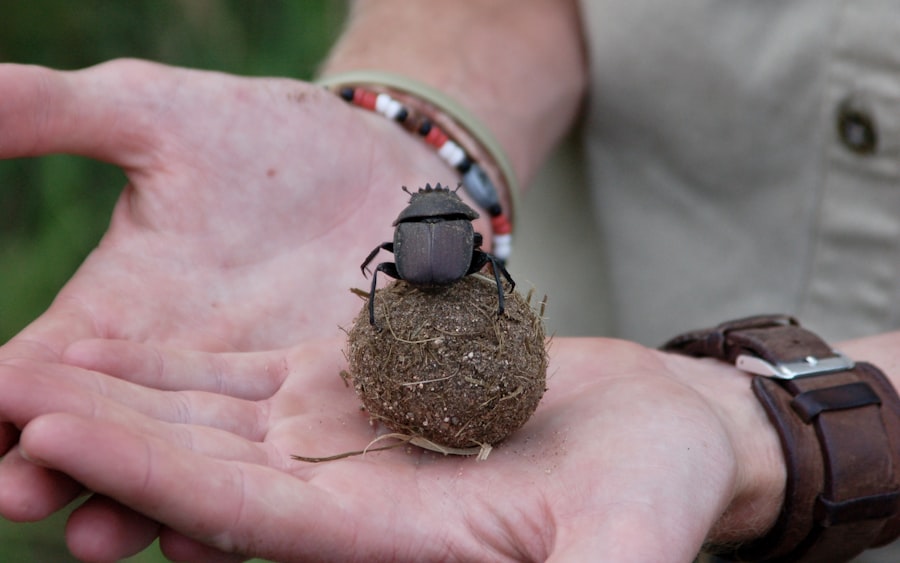
Dung beetles play an indispensable role in maintaining ecosystem health and functionality. By breaking down animal waste, they facilitate nutrient cycling, which is essential for soil fertility. As they bury dung, they aerate the soil and promote microbial activity, leading to enhanced decomposition processes.
This not only enriches the soil but also supports plant growth, making dung beetles vital contributors to agricultural productivity. Moreover, dung beetles help control populations of parasites and pathogens associated with animal feces. By consuming and burying dung, they reduce the likelihood of disease transmission among livestock and wildlife.
For instance, studies have shown that areas with high dung beetle activity have lower levels of parasitic infections in grazing animals. This natural pest control mechanism underscores the importance of preserving dung beetle populations as part of integrated pest management strategies in agriculture.
The Diversity of Dung Beetle Species
| Region | Number of Species | Common Genera | Habitat Types | Notable Adaptations |
|---|---|---|---|---|
| Africa | 700+ | Scarabaeus, Onthophagus | Savannas, Forests, Deserts | Rolling dung balls, nocturnal activity |
| South America | 500+ | Dichotomius, Canthon | Rainforests, Grasslands | Burrowing, dung burial |
| Asia | 400+ | Onthophagus, Copris | Forests, Agricultural lands | Flight capability, dung ball rolling |
| Australia | 300+ | Onthophagus, Euoniticellus | Grasslands, Woodlands | Adapted to arid conditions |
| Europe | 150+ | Geotrupes, Onthophagus | Forests, Meadows | Seasonal activity, dung burial |
| North America | 200+ | Phanaeus, Onthophagus | Forests, Grasslands | Rolling and tunneling behaviors |
The diversity of dung beetle species is staggering, with thousands of variations adapted to different environments and ecological niches. They can be found in a wide range of habitats, from tropical rainforests to arid deserts, each exhibiting unique adaptations that enable them to thrive in their specific surroundings. For example, some tropical species are brightly colored and larger in size compared to their temperate counterparts, which tend to be smaller and more subdued in coloration.
Within this vast diversity, there are also notable differences in behavior and ecological roles. Some species are specialized feeders that prefer specific types of dung, while others are generalists that will consume any available fecal matter. This specialization can lead to complex interactions within ecosystems, as different species may compete for resources or engage in mutualistic relationships with other organisms.
The study of dung beetle diversity not only enriches our understanding of ecological interactions but also provides insights into evolutionary processes.
Dung Beetles and Agriculture
The relationship between dung beetles and agriculture is multifaceted and significant. Farmers often overlook these insects, yet they provide invaluable services that enhance crop production and soil health. By burying dung, dung beetles improve soil structure and fertility, which can lead to increased agricultural yields.
Their activities promote the breakdown of organic matter, releasing nutrients that are essential for plant growth. Furthermore, dung beetles contribute to pest management by reducing the prevalence of fly populations that breed in animal waste. In livestock operations, this natural control can lead to healthier animals and reduced reliance on chemical pesticides.
Research has demonstrated that farms with active dung beetle populations experience fewer pest-related issues, resulting in lower costs for farmers and more sustainable agricultural practices. The integration of dung beetles into farming systems represents a promising avenue for enhancing productivity while minimizing environmental impact.
Dung Beetles in Ancient Cultures and Mythology
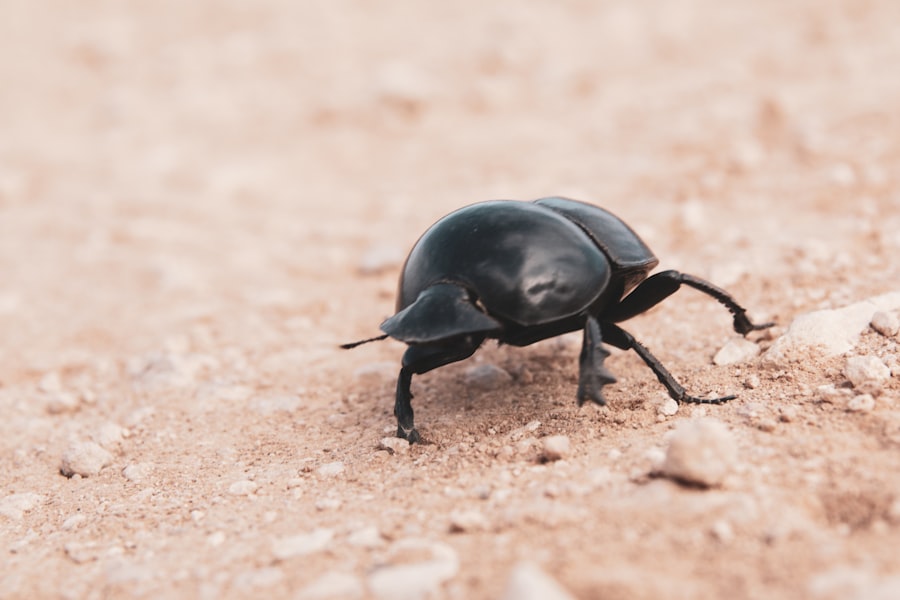
Dung beetles have captured human imagination for centuries, often symbolizing renewal and transformation in various cultures around the world. In ancient Egypt, the scarab beetle was revered as a sacred symbol associated with the sun god Ra. The rolling behavior of these beetles was likened to the sun’s journey across the sky, leading to their association with rebirth and regeneration.
Scarab amulets were commonly used as protective talismans, believed to bring good fortune and safeguard against evil. In other cultures, dung beetles have been featured in folklore and mythology as symbols of hard work and perseverance. Their industrious nature has inspired stories that highlight their role in maintaining balance within ecosystems.
This cultural significance underscores the deep-rooted connection between humans and these remarkable insects, illustrating how they have transcended their ecological roles to become symbols of resilience and transformation throughout history.
Conservation Efforts for Dung Beetle Populations
Despite their ecological importance, dung beetle populations face numerous threats due to habitat loss, agricultural intensification, and climate change. Urbanization and land conversion for agriculture have led to significant declines in suitable habitats for these insects. Additionally, the use of chemical fertilizers and pesticides can adversely affect their populations by disrupting their food sources and breeding grounds.
Conservation efforts aimed at protecting dung beetle populations are crucial for maintaining ecosystem health. Initiatives such as habitat restoration, sustainable land management practices, and the promotion of organic farming can help create environments conducive to dung beetle survival. Furthermore, raising awareness about their ecological roles can foster public support for conservation measures.
Engaging local communities in monitoring programs can also provide valuable data on population trends and habitat requirements.
Future Research and Discoveries in Dung Beetle Science
The field of dung beetle research is continually evolving, with new discoveries shedding light on their biology, ecology, and conservation needs. Recent studies have focused on understanding the impacts of climate change on dung beetle distributions and behaviors. As temperatures rise and precipitation patterns shift, researchers are investigating how these changes may affect dung availability and beetle populations.
Moreover, advancements in molecular techniques are enabling scientists to explore genetic diversity within dung beetle populations more comprehensively. This research can provide insights into evolutionary processes and help identify conservation priorities for vulnerable species. Additionally, interdisciplinary approaches that integrate ecology with social sciences are being employed to understand how human activities influence dung beetle dynamics.
As our understanding of these remarkable insects deepens, it becomes increasingly clear that dung beetles are not just scavengers but vital components of healthy ecosystems. Continued research will undoubtedly reveal more about their complex interactions within ecosystems and their potential contributions to sustainable practices in agriculture and conservation efforts worldwide.
Dung beetles, particularly the species Scarabaeus sacer, play a crucial role in their ecosystems by recycling nutrients and improving soil health. For those interested in learning more about the fascinating behaviors and ecological importance of these insects, you can read a related article on the Animal Kingdom website. Check it out here: Animal Kingdom.
FAQs
What is the scientific name of the dung beetle?
The scientific name of the dung beetle is Scarabaeus sacer.
What is the primary diet of the dung beetle?
Dung beetles primarily feed on the feces of herbivorous animals.
Where are dung beetles commonly found?
Dung beetles are commonly found in various habitats worldwide, especially in grasslands, forests, and farmlands where animal dung is available.
What role do dung beetles play in the ecosystem?
Dung beetles play a crucial role in nutrient recycling, soil aeration, and reducing parasites by burying and consuming animal dung.
How do dung beetles use dung?
Dung beetles collect and roll dung into balls, which they either eat or bury as a food source for their larvae.
Are dung beetles beneficial to agriculture?
Yes, dung beetles benefit agriculture by improving soil health, reducing pests, and enhancing nutrient cycling.
How do dung beetles navigate?
Some dung beetles, including Scarabaeus sacer, use celestial cues such as the Milky Way to navigate at night.
What is the size of Scarabaeus sacer?
Scarabaeus sacer typically measures between 20 to 30 millimeters in length.
Do dung beetles have any cultural significance?
Yes, Scarabaeus sacer was considered sacred in ancient Egyptian culture and symbolized rebirth and the cycle of life.
How do dung beetles reproduce?
Dung beetles reproduce by burying dung balls in which they lay their eggs; the larvae then feed on the dung as they develop.