Majestic Owl Butterfly: Caligo memnon Facts
The Majestic Owl Butterfly, scientifically known as Caligo memnon, is a large butterfly species with a wingspan reaching up to 7 inches. Named for the prominent eyespots on its wings that resemble owl eyes, this butterfly serves as an example of evolutionary adaptation. The species contributes to its ecosystem through pollination and as prey for various predators.
Native to the tropical rainforests of Central and South America, Caligo memnon inhabits humid environments with abundant food resources and suitable breeding conditions. The butterfly is part of the rich biodiversity characteristic of these regions. Its life cycle, feeding patterns, and ecological interactions are closely connected to the health of its rainforest habitat, making it relevant to conservation research and environmental monitoring efforts.
Key Takeaways
- The Majestic Owl Butterfly (Caligo memnon) is known for its large size and distinctive eye-like wing patterns.
- It primarily inhabits tropical rainforests across Central and South America.
- Its life cycle includes stages from egg to caterpillar, pupa, and adult butterfly.
- The butterfly feeds mainly on fermenting fruit and nectar, while using eye spots to deter predators.
- Caligo memnon plays a vital role in pollination and maintaining ecological balance but faces threats from habitat loss.
Physical Characteristics of the Caligo memnon
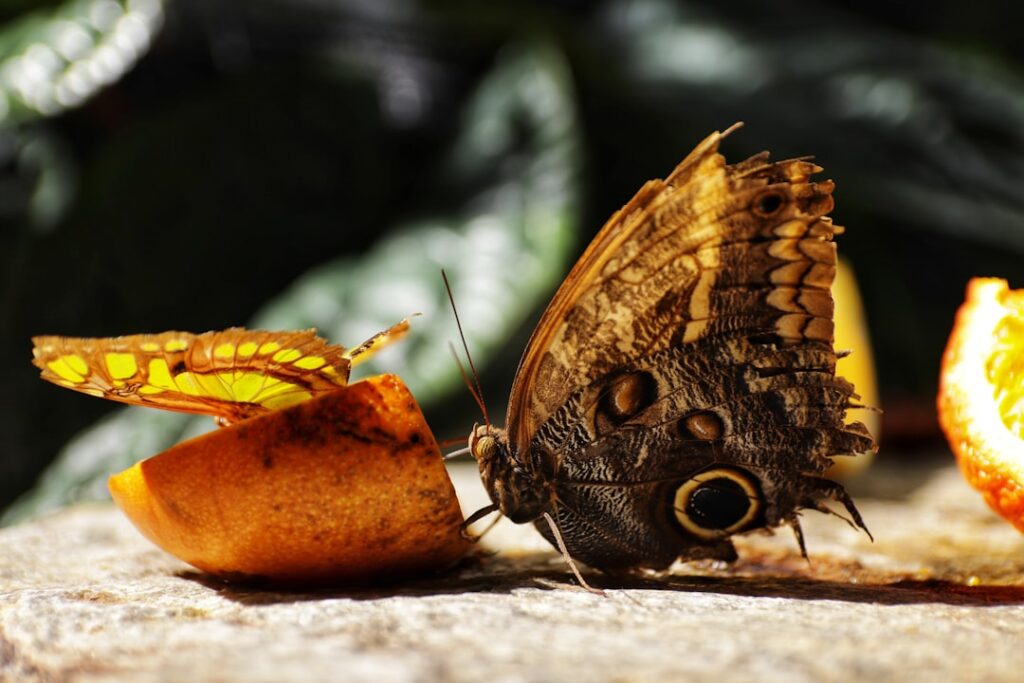
The physical appearance of the Caligo memnon is one of its most striking features. The upper side of its wings showcases a rich brown coloration adorned with intricate patterns that mimic the textures of tree bark, providing excellent camouflage against predators. The undersides of its wings are even more remarkable; they are mottled with shades of brown and gray, featuring large, eye-like spots that can measure up to 2 inches in diameter.
These eye spots serve a dual purpose: they not only help in camouflage but also act as a deterrent against potential predators by creating the illusion of a larger creature. In addition to their size and coloration, the wings of the Majestic Owl Butterfly are structurally unique. They possess a strong and flexible framework that allows for agile flight, enabling them to navigate through dense foliage with ease.
The butterflies are also equipped with long, slender antennae that help them detect pheromones and navigate their environment. The combination of these physical traits not only enhances their survival but also contributes to their allure as one of nature’s most magnificent insects.
Habitat and Distribution of the Majestic Owl Butterfly
The Majestic Owl Butterfly is predominantly found in the tropical rainforests of Central and South America, with a distribution range that extends from southern Mexico down to Brazil. These butterflies favor humid environments where they can find abundant vegetation and suitable microclimates for their life processes. They are often spotted in areas rich in host plants, which are essential for their larvae during the caterpillar stage.
The dense canopy of the rainforest provides both shelter and a diverse array of food sources, making it an ideal habitat for this species. Within their habitat, Caligo memnon exhibits a preference for lower altitudes, typically residing at elevations ranging from sea level to about 1,500 meters. They are often found near rivers and streams where moisture levels are higher, contributing to the lush vegetation that supports their life cycle.
The butterfly’s reliance on specific environmental conditions underscores the importance of preserving these habitats, as any disruption could have significant consequences for their populations.
Life Cycle and Reproduction of the Caligo memnon
The life cycle of the Majestic Owl Butterfly consists of four distinct stages: egg, larva (caterpillar), pupa (chrysalis), and adult butterfly. The female butterfly lays her eggs on the leaves of specific host plants, which are crucial for the survival of the larvae once they hatch. These host plants typically belong to families such as Lauraceae and Moraceae, which provide essential nutrients for the developing caterpillars.
The eggs are small and often laid in clusters, camouflaged against the foliage to protect them from predators. Once the eggs hatch, the caterpillars emerge and begin their voracious feeding on the leaves of their host plants. This stage is critical for growth, as caterpillars must consume large quantities of foliage to store energy for their transformation into adults.
After several molts, they enter the pupal stage, where they undergo metamorphosis within a protective chrysalis. This transformation can take anywhere from a few weeks to several months, depending on environmental conditions such as temperature and humidity. Upon emerging as adults, the butterflies engage in mating rituals that often involve elaborate displays and pheromone releases to attract potential partners.
Diet and Feeding Habits of the Majestic Owl Butterfly
| Metric | Data |
|---|---|
| Scientific Name | Caligo memnon |
| Common Name | Owl Butterfly |
| Wingspan | 11 to 15 cm (4.3 to 5.9 inches) |
| Habitat | Tropical and subtropical rainforests of Central and South America |
| Diet (Larvae) | Primarily banana plants and other Musa species |
| Diet (Adults) | Fermented fruit juices and tree sap |
| Activity | Crepuscular (active during dawn and dusk) |
| Distinctive Feature | Large eyespots on wings resembling owl eyes |
| Average Lifespan | 2 to 3 weeks (adult stage) |
As adults, Majestic Owl Butterflies primarily feed on nectar from various flowering plants. Their long proboscis allows them to reach deep into flowers to extract nectar, which serves as their main source of energy. They are particularly attracted to brightly colored flowers that produce abundant nectar, such as those belonging to the families Asteraceae and Lamiaceae.
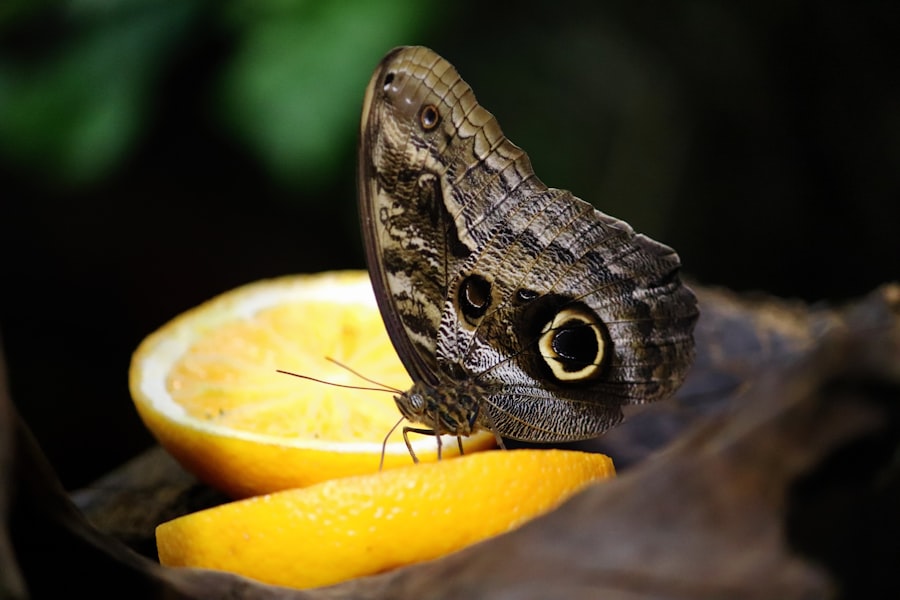
This feeding behavior not only sustains their energy levels but also plays a vital role in pollination, as they inadvertently transfer pollen from one flower to another while feeding. In addition to nectar, adult Caligo memnon may also consume tree sap and rotting fruit when available. This diverse diet helps them obtain essential nutrients that may not be present in nectar alone.
Observations have shown that these butterflies often gather in groups around sources of decaying fruit or sap flows, where they can feed communally. This behavior not only enhances their feeding efficiency but also provides opportunities for social interactions among individuals.
Predators and Defense Mechanisms of the Caligo memnon
Despite their impressive size and striking appearance, Majestic Owl Butterflies face numerous threats from predators in their natural habitat. Birds are among their primary predators, drawn to their size and movement patterns.
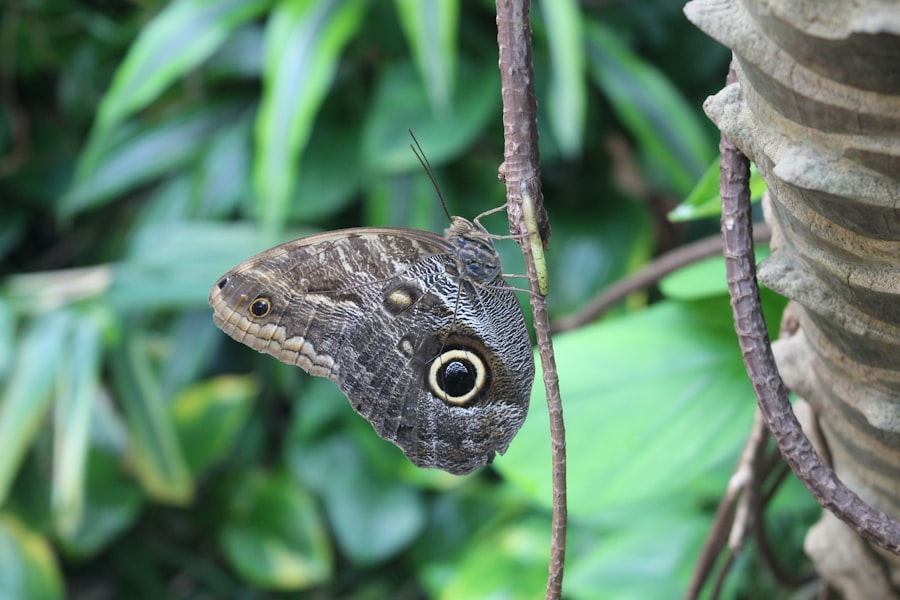
One of the most notable is their remarkable camouflage; when resting with their wings closed, they blend seamlessly into their surroundings, resembling dead leaves or tree bark. In addition to camouflage, the eye spots on their wings serve as a form of intimidation against potential predators. When threatened, these butterflies may display their wings suddenly, revealing the large eye spots that can startle or confuse birds and other predators momentarily.
This brief distraction can provide them with an opportunity to escape. Furthermore, during their caterpillar stage, they exhibit behaviors such as mimicking twigs or leaves to avoid detection by predators.
Conservation Status and Threats to the Majestic Owl Butterfly
The conservation status of the Majestic Owl Butterfly is influenced by several factors that threaten its habitat and population stability. Deforestation is one of the most significant threats facing this species today. As tropical rainforests are cleared for agriculture, logging, and urban development, the natural habitats that support Caligo memnon are rapidly diminishing.
This loss not only reduces available food sources but also disrupts breeding grounds essential for their life cycle. Additionally, climate change poses a growing threat to the Majestic Owl Butterfly’s survival. Alterations in temperature and precipitation patterns can affect the availability of host plants and nectar sources critical for their sustenance.
Conservation efforts aimed at protecting their habitats through reforestation initiatives and sustainable land-use practices are crucial for ensuring the long-term survival of this magnificent species.
Importance and Role of the Caligo memnon in the Ecosystem
The Majestic Owl Butterfly plays an integral role in its ecosystem beyond its aesthetic appeal. As a pollinator, it contributes significantly to the reproductive success of many flowering plants within its habitat. By transferring pollen from one bloom to another while feeding on nectar, Caligo memnon facilitates plant reproduction, which is essential for maintaining biodiversity within tropical ecosystems.
This interaction underscores the interconnectedness of species within an ecosystem; without effective pollinators like the Majestic Owl Butterfly, many plant species could decline or face extinction. Moreover, as both prey and predator within its food web, Caligo memnon contributes to ecological balance. Its larvae serve as food for various insectivorous birds and other predators during their development stages.
In turn, adult butterflies provide sustenance for larger predators when they fall victim to predation. This dynamic highlights the importance of maintaining healthy populations of Majestic Owl Butterflies as part of broader conservation efforts aimed at preserving biodiversity and ecosystem integrity in tropical rainforests. In summary, the Majestic Owl Butterfly is not only a stunning example of nature’s beauty but also a vital component of its ecosystem.
Its unique adaptations, life cycle intricacies, and interactions with other species illustrate the complexity of ecological relationships within tropical environments. Protecting this remarkable butterfly is essential not only for its survival but also for maintaining the health and diversity of its habitat.
The Owl Butterfly (Caligo memnon) is a fascinating species known for its striking eye-patterned wings that serve as a defense mechanism against predators. For those interested in learning more about the broader context of animal behavior and adaptations, you might find our article on animal communication insightful. You can read more about it in our About Us section, where we explore various aspects of the animal kingdom and their unique survival strategies.
FAQs
What is the Owl Butterfly (Caligo memnon)?
The Owl Butterfly, scientifically known as Caligo memnon, is a large butterfly species famous for the prominent eye-like patterns on its wings, which resemble owl eyes. These patterns serve as a defense mechanism against predators.
Where is the Owl Butterfly (Caligo memnon) found?
The Owl Butterfly is native to Central and South America, commonly found in tropical rainforests and secondary forests from Mexico to the Amazon basin.
What does the Owl Butterfly (Caligo memnon) look like?
The Owl Butterfly has large wings with brown and tan coloration. The underside of the wings features large, circular eye spots that mimic owl eyes, helping to deter predators. The upper side of the wings is usually more colorful with shades of blue and purple.
What is the diet of the Owl Butterfly (Caligo memnon)?
Adult Owl Butterflies primarily feed on the juices of rotting fruit, tree sap, and nectar. The caterpillars feed on various plants, especially banana and heliconia leaves.
How does the Owl Butterfly (Caligo memnon) protect itself from predators?
The Owl Butterfly uses its large eye spots on the wings to startle or confuse predators, making them think they are facing a larger animal like an owl. Additionally, their slow and erratic flight helps avoid predation.
What is the life cycle of the Owl Butterfly (Caligo memnon)?
The life cycle includes four stages: egg, larva (caterpillar), pupa (chrysalis), and adult butterfly. The caterpillars feed on host plants before pupating and emerging as adult butterflies.
Are Owl Butterflies (Caligo memnon) active during the day or night?
Owl Butterflies are primarily crepuscular, meaning they are most active during dawn and dusk. Their activity pattern helps them avoid many daytime predators.
Can Owl Butterflies (Caligo memnon) be kept in captivity?
Yes, Owl Butterflies can be kept in butterfly houses or controlled environments for educational and conservation purposes. They require specific host plants for their caterpillars and appropriate conditions to thrive.
What role do Owl Butterflies (Caligo memnon) play in the ecosystem?
Owl Butterflies contribute to pollination and serve as prey for various predators, playing an important role in maintaining the balance of tropical ecosystems. Their presence also indicates healthy forest environments.