
Managing Longhorn Beetle Infestations: Anoplophora glabripennis Control
The Asian longhorned beetle, scientifically known as Anoplophora glabripennis, is a wood-boring insect that poses a significant threat to various hardwood trees. Native to East Asia, particularly China and Korea, this beetle has made its way to North America and parts of Europe, where it has established populations that can devastate local ecosystems. The adult beetles are easily recognizable by their striking black bodies adorned with white spots and their long antennae, which can be up to twice the length of their bodies.
The larvae, which are the immature stage of the beetle, tunnel through the wood of trees, causing structural damage that can lead to tree death. The life cycle of Anoplophora glabripennis is closely tied to its host trees, which include species such as maples, elms, and willows.
This feeding disrupts the tree’s ability to transport water and nutrients, ultimately leading to its decline. The infestation can go unnoticed for years, as the initial signs may be subtle. However, once established, the beetle can spread rapidly, leading to widespread tree mortality in affected areas.
Understanding the biology and behavior of Anoplophora glabripennis is crucial for effective management and control strategies.
Key Takeaways
- The Asian longhorn beetle (Anoplophora glabripennis) causes significant damage to hardwood trees by boring into them.
- Early signs of infestation include exit holes, frass, and dieback in tree branches.
- Prevention focuses on monitoring, quarantines, and removing infested trees promptly.
- Biological, chemical, and cultural control methods can be combined for effective management.
- Integrated Pest Management (IPM) and ongoing monitoring are essential for long-term control of infestations.
Identifying Signs of Infestation: Anoplophora glabripennis
Detecting an infestation of Anoplophora glabripennis early is vital for effective management. One of the most telling signs is the presence of exit holes in the bark of infested trees. These holes are typically round and about 1/2 inch in diameter, created by adult beetles as they emerge from the wood.
Additionally, frass— a mixture of wood shavings and excrement—can often be found at the base of infested trees or within the exit holes. This frass is a clear indicator of larval activity within the tree. Another sign of infestation is the wilting or yellowing of leaves on affected trees.
As the larvae feed on the inner bark and cambium layer, they disrupt the tree’s vascular system, leading to reduced nutrient and water transport. In some cases, trees may exhibit premature leaf drop or dieback in their upper branches. Furthermore, visible scars or oozing sap on the bark can indicate stress or injury caused by beetle activity.
Observing these symptoms can help landowners and forestry professionals identify potential infestations before they escalate into larger problems.
Prevention and Early Detection of Anoplophora glabripennis Infestations
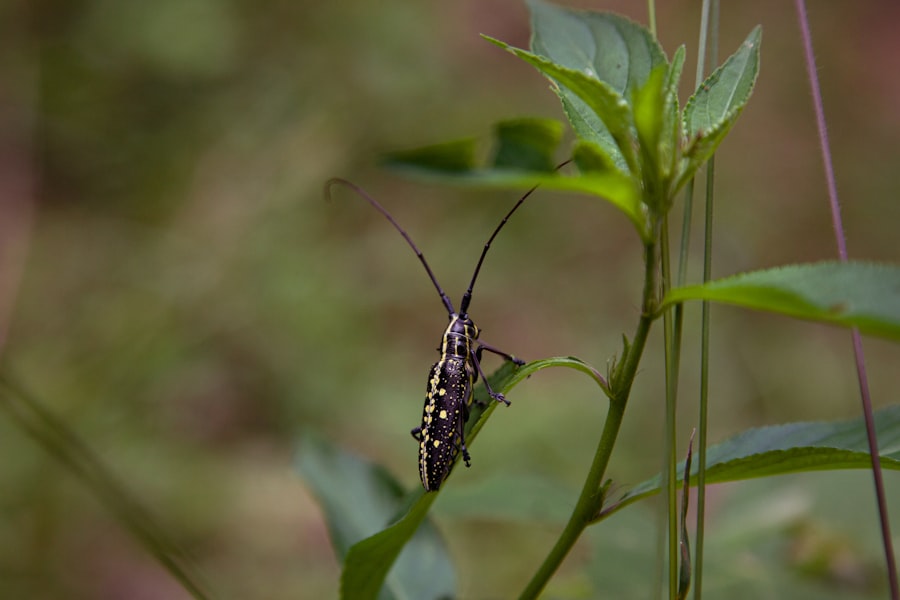
Preventing an infestation of Anoplophora glabripennis requires a multifaceted approach that includes monitoring and management practices aimed at reducing risk factors. One effective strategy is to promote tree health through proper care and maintenance. Healthy trees are more resilient to pest attacks; therefore, ensuring adequate watering, mulching, and pruning can help bolster their defenses against potential infestations.
Additionally, maintaining biodiversity in urban and forested areas can create a more balanced ecosystem that may deter pest populations. Early detection is equally important in managing Anoplophora glabripennis infestations. Regular inspections of trees, especially those known to be susceptible to beetle attacks, should be conducted.
Landowners and arborists should be trained to recognize the signs of infestation and understand the life cycle of the beetle. Utilizing traps specifically designed for longhorned beetles can also aid in early detection efforts. These traps often use pheromones to attract adult beetles, allowing for monitoring of their presence in an area.
By combining preventive measures with vigilant monitoring, it is possible to catch infestations before they become widespread.
Biological Control Methods for Anoplophora glabripennis
| Biological Control Method | Target Organism | Effectiveness | Application | Notes |
|---|---|---|---|---|
| Parasitoid Wasps (e.g., Spathius agrili) | Anoplophora glabripennis larvae | High parasitism rates (up to 70%) | Released in infested areas to parasitize larvae | Specific to A. glabripennis, reduces larval population |
| Entomopathogenic Fungi (e.g., Beauveria bassiana) | Adult and larval beetles | Moderate to high mortality (50-80%) | Applied as a spray on infested trees | Environmentally friendly, requires humid conditions |
| Predatory Beetles (e.g., Clerid beetles) | Eggs and larvae of A. glabripennis | Variable effectiveness | Encouraged through habitat management | Natural predators, limited control alone |
| Nematodes (e.g., Steinernema spp.) | Larvae in wood galleries | Moderate effectiveness | Injected into infested trees | Can penetrate galleries, requires precise application |
Biological control methods offer an environmentally friendly approach to managing Anoplophora glabripennis populations. One promising avenue involves the use of natural predators or parasitoids that target the beetle at various life stages. For instance, certain species of wasps have been identified as potential biological control agents that parasitize longhorned beetle larvae.
These wasps lay their eggs inside or on the larvae, ultimately leading to their demise. Research into these natural enemies is ongoing, with scientists exploring their effectiveness in controlling beetle populations without harming non-target species. Another biological control strategy involves promoting beneficial microorganisms that can inhibit the growth or development of Anoplophora glabripennis.
For example, certain fungi have been shown to infect and kill wood-boring insects when introduced into their habitat. By applying these fungi to infested trees or surrounding areas, it may be possible to reduce beetle populations significantly. However, successful implementation of biological control methods requires careful consideration of ecological balance and potential impacts on native species.
Chemical Control Methods for Anoplophora glabripennis
Chemical control methods are often employed when infestations of Anoplophora glabripennis reach critical levels that threaten tree health and safety. Insecticides specifically formulated for wood-boring insects can be applied directly to infested trees or surrounding areas to reduce beetle populations. Systemic insecticides are particularly effective as they are absorbed by the tree and can kill larvae feeding within the wood.
Chemicals such as imidacloprid have been used successfully in various settings; however, their application must be carefully managed to minimize environmental impact. It is essential to follow label instructions and local regulations when using chemical controls to ensure safety for non-target organisms and human health. Additionally, timing is crucial; applying insecticides during specific life stages—such as when adults are emerging or larvae are actively feeding—can enhance effectiveness.
Integrated with other management strategies, chemical controls can play a vital role in mitigating severe infestations while minimizing harm to beneficial insects and surrounding ecosystems.
Cultural Control Methods for Anoplophora glabripennis
Cultural control methods focus on altering practices and environmental conditions to make them less conducive to Anoplophora glabripennis infestations. One effective cultural practice is the removal and destruction of infested trees or wood debris that may harbor beetles or their larvae. This practice not only reduces potential breeding sites but also limits the spread of infestations to healthy trees nearby.
Proper disposal methods include chipping wood into small pieces or burning it when regulations allow. Another cultural approach involves planting tree species that are less susceptible to Anoplophora glabripennis as part of landscape design or reforestation efforts. By diversifying tree species in urban areas or forests, it becomes more challenging for pests like the longhorned beetle to establish large populations.
Integrated Pest Management for Anoplophora glabripennis Control
Integrated Pest Management (IPM) is a holistic approach that combines multiple strategies for controlling Anoplophora glabripennis while minimizing environmental impact. This method emphasizes understanding the pest’s biology and ecology, allowing for informed decision-making regarding control measures. IPM incorporates monitoring techniques to assess pest populations and determine thresholds for intervention based on economic or ecological considerations.
In an IPM framework, cultural practices such as promoting tree health and diversity are combined with biological controls like introducing natural predators or parasitoids. Chemical controls may also be integrated but used judiciously as a last resort when other methods fail to manage infestations effectively. Education plays a crucial role in IPM; stakeholders must be informed about best practices for prevention and control while fostering collaboration among landowners, arborists, and local authorities.
Long-term Management and Monitoring of Anoplophora glabripennis Infestations
Long-term management of Anoplophora glabripennis infestations requires ongoing monitoring and adaptive strategies that respond to changing conditions in affected areas. Establishing a regular monitoring program allows land managers to track beetle populations over time and assess the effectiveness of implemented control measures. This program may include visual inspections, trap placements, and data collection on tree health indicators.
Moreover, public awareness campaigns can enhance community involvement in monitoring efforts by encouraging residents to report signs of infestation or unusual tree decline. Engaging local stakeholders fosters a sense of shared responsibility for managing forest health and can lead to more effective responses to emerging threats like Anoplophora glabripennis. By prioritizing long-term management strategies that incorporate continuous learning and adaptation, it becomes possible to mitigate the impact of this invasive pest on ecosystems while preserving valuable hardwood resources for future generations.
The Longhorn Beetle (Anoplophora glabripennis) is a fascinating species known for its distinctive long antennae and wood-boring habits. This invasive pest poses a significant threat to hardwood trees, leading to extensive ecological and economic impacts. For more information on the implications of invasive species like the Longhorn Beetle, you can read our article on the subject. Additionally, if you have any questions or feedback, feel free to reach out through our contact page.
FAQs
What is the Longhorn Beetle (Anoplophora glabripennis)?
The Longhorn Beetle, scientifically known as Anoplophora glabripennis, is a species of wood-boring beetle native to East Asia. It is recognized for its distinctive long antennae and glossy black body with white spots.
Where is the Longhorn Beetle commonly found?
Originally native to China and Korea, the Longhorn Beetle has been introduced to other regions, including parts of North America and Europe, where it is considered an invasive species.
Why is the Longhorn Beetle considered a pest?
The Longhorn Beetle is considered a pest because its larvae bore into hardwood trees, damaging and often killing them. This can lead to significant ecological and economic impacts, especially in urban and forested areas.
What types of trees does the Longhorn Beetle infest?
The beetle primarily infests hardwood trees such as maple, elm, willow, and poplar. It can attack both healthy and stressed trees, making it a serious threat to various tree species.
How can the presence of Longhorn Beetles be identified?
Signs of infestation include round exit holes in the bark, sawdust-like frass at the base of trees, and visible adult beetles or larvae inside the wood. Damage to branches and dieback of foliage may also be observed.
What measures are taken to control the Longhorn Beetle?
Control measures include quarantines to prevent spread, removal and destruction of infested trees, chemical treatments, and public awareness campaigns. Early detection is crucial for effective management.
Is the Longhorn Beetle harmful to humans?
No, the Longhorn Beetle does not pose a direct threat to humans. However, its impact on trees can affect ecosystems and urban environments.
How does the Longhorn Beetle spread to new areas?
The beetle spreads primarily through the movement of infested wood materials, such as firewood, lumber, and wooden packing materials. Natural dispersal by flying adults is limited to shorter distances.
What is the lifecycle of the Longhorn Beetle?
The lifecycle includes egg, larval, pupal, and adult stages. Larvae bore into wood and develop over one to two years before emerging as adults, which then mate and lay eggs to continue the cycle.
Can the Longhorn Beetle be eradicated once established?
Eradication is challenging but possible with coordinated efforts involving monitoring, removal of infested trees, and strict quarantine measures. Early detection and rapid response are key to successful eradication.