The Stunning Blue Morpho Butterfly: A Natural Wonder
The Blue Morpho butterfly (Morpho peleides) is a large neotropical butterfly species recognized for its distinctive metallic blue wing coloration. Adult specimens typically measure 5-6 inches (12.7-15.2 cm) in wingspan, making them among the larger butterfly species in their range. This species inhabits tropical rainforests across Central and South America, from Mexico to Colombia, where it occupies various forest strata from the understory to the canopy.
Morpho peleides belongs to the family Nymphalidae, subfamily Morphinae, which comprises approximately 80 species of large, often iridescent butterflies. The species exhibits sexual dimorphism, with males displaying more vibrant blue coloration than females. The characteristic blue appearance results from microscopic structures on the wing scales that reflect specific wavelengths of light rather than from pigmentation.
This species serves multiple ecological functions within rainforest ecosystems. Adults feed primarily on rotting fruit, tree sap, and occasionally nectar, while larvae consume plants in the Fabaceae family. The butterfly’s life cycle, habitat requirements, population dynamics, and interactions with other species provide insights into tropical forest ecology and biodiversity patterns.
Current research focuses on understanding the species’ role in forest ecosystems, its response to habitat fragmentation, and its potential as an indicator species for environmental monitoring.
Key Takeaways
- The Blue Morpho butterfly is known for its striking iridescent blue wings and unique behaviors.
- It inhabits tropical rainforests primarily in Central and South America.
- Its life cycle includes stages from egg to caterpillar, pupa, and adult butterfly.
- The species plays a vital role in pollination and maintaining ecosystem balance.
- Conservation efforts are crucial due to habitat loss and environmental threats.
Physical Characteristics and Behavior
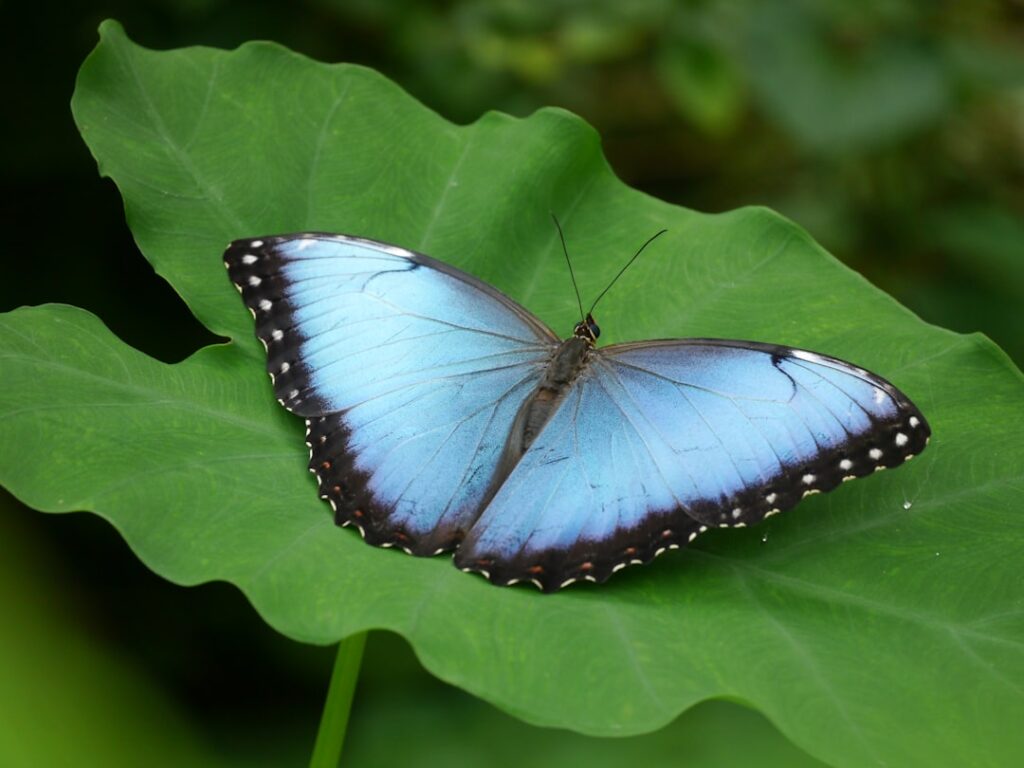
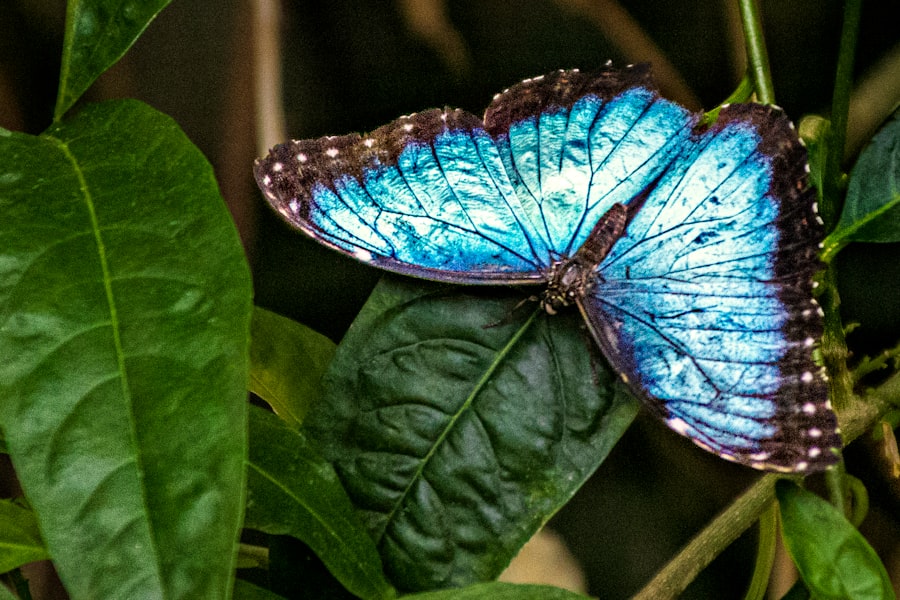
The physical appearance of the Blue Morpho butterfly is nothing short of extraordinary. Its upper wings are a brilliant blue, adorned with black edges that create a striking contrast. This iridescence is not due to pigments but rather the microscopic structure of the scales on its wings, which reflect light in a way that enhances its vivid color.
When viewed from different angles, the wings can appear to change shades, creating an enchanting visual effect that has fascinated observers for centuries. The underside of the wings is a more subdued brown with eye-like patterns that serve as camouflage against predators when the butterfly is resting. Behaviorally, the Blue Morpho exhibits intriguing traits that enhance its survival.
It is known for its erratic flight patterns, which can confuse potential predators. When threatened, it often flutters away quickly, showcasing its bright blue wings before landing and closing them to reveal the more cryptic underside. This behavior not only aids in evasion but also serves as a display mechanism during courtship rituals.
Males are particularly territorial and will engage in aerial displays to attract females or ward off rivals. Their behavior is not solely focused on reproduction; they also engage in basking to regulate their body temperature, often seen perched on leaves with their wings open to absorb sunlight.
Habitat and Distribution
The Blue Morpho butterfly thrives in the lush environments of tropical rainforests, where humidity and temperature create an ideal habitat for its survival. These butterflies are predominantly found in countries such as Brazil, Colombia, Peru, and Ecuador, where dense vegetation provides ample food sources and shelter from predators. The rainforest ecosystem supports a diverse array of flora and fauna, which is essential for the Blue Morpho’s life cycle.
The presence of host plants like leguminous trees is crucial for their larvae, as these plants provide the necessary nutrients for growth. In addition to primary rainforests, Blue Morphos can also be found in secondary forests and areas near riverbanks where sunlight penetrates through the canopy. They are often spotted near clearings or along forest edges where they can bask in the sun and engage in courtship displays.
The distribution of the Blue Morpho is closely linked to the availability of suitable habitats; thus, deforestation and habitat fragmentation pose significant threats to their populations.
Life Cycle and Reproduction
The life cycle of the Blue Morpho butterfly consists of four distinct stages: egg, larva (caterpillar), pupa (chrysalis), and adult butterfly. The female lays her eggs on the underside of host plant leaves to protect them from predators. These eggs are small and round, typically green or brown in color, allowing them to blend in with their surroundings.
After about four to ten days, depending on environmental conditions, the eggs hatch into caterpillars. The caterpillar stage is marked by rapid growth and feeding on host plants. Blue Morpho caterpillars are strikingly different from adults; they are green with spiny projections that help deter predators.
This stage lasts approximately two to four weeks as they molt several times before entering the pupal stage. Once fully grown, the caterpillar forms a chrysalis that hangs from a branch or leaf. This transformation is a remarkable process where the caterpillar undergoes metamorphosis into its adult form.
The pupal stage can last from two weeks to several months depending on environmental factors such as temperature and humidity. Upon emerging from the chrysalis, the adult Blue Morpho must pump fluid into its wings to expand them fully before taking its first flight. The adult stage can last anywhere from a few weeks to several months, during which time they engage in mating and feeding on nectar from various flowers.
Males are particularly active during this period as they seek out females for reproduction. The entire life cycle from egg to adult can take anywhere from two months to a year depending on environmental conditions and predation pressures.
Importance in Ecosystem
| Metric | Data / Description |
|---|---|
| Scientific Name | Morpho peleides |
| Common Name | Blue Morpho Butterfly |
| Wingspan | 12 to 15 cm (4.7 to 5.9 inches) |
| Habitat | Tropical rainforests of Central and South America |
| Flight Speed | Up to 8 km/h (5 mph) |
| Lifespan | Approximately 115 days (from egg to adult death) |
| Diet (Caterpillar) | Leaves of various leguminous plants |
| Diet (Adult) | Fermented fruit, tree sap, fungi, and moisture from mud |
| Coloration | Brilliant iridescent blue on dorsal wings; brown with eyespots on ventral side |
| Predators | Birds, frogs, lizards, and spiders |
The Blue Morpho butterfly plays a vital role in its ecosystem as both a pollinator and a prey species within the food web. As it feeds on nectar from various flowering plants, it inadvertently facilitates pollination by transferring pollen from one flower to another. This process is essential for plant reproduction and contributes to the overall health of the ecosystem.
Many plants rely on specific pollinators like butterflies to thrive; thus, the presence of Blue Morphos can enhance biodiversity within their habitats. Moreover, as a prey species, Blue Morphos are an integral part of the food chain. They serve as a food source for various predators including birds, reptiles, and other insects.
Their unique coloration and behavior provide them with some level of protection against predation; however, they are still vulnerable to natural threats. The balance between predator and prey dynamics is crucial for maintaining ecological stability. The decline or extinction of species like the Blue Morpho could have cascading effects throughout their ecosystem.
Threats and Conservation Efforts
Despite their beauty and ecological importance, Blue Morpho butterflies face numerous threats primarily due to human activities. Deforestation for agriculture, logging, and urban development has led to significant habitat loss across their range. As tropical rainforests are cleared or fragmented, the availability of host plants diminishes, directly impacting their reproductive success and survival rates.
Climate change also poses a significant threat by altering temperature and precipitation patterns that affect their habitats. Conservation efforts aimed at protecting the Blue Morpho involve habitat preservation and restoration initiatives. Organizations work towards establishing protected areas within their natural range to safeguard these butterflies from habitat destruction.
Additionally, educational programs raise awareness about the importance of biodiversity and encourage sustainable practices among local communities. Breeding programs in captivity have also been initiated to help bolster populations while reducing pressure on wild habitats.
Cultural Significance
The Blue Morpho butterfly holds significant cultural value across various societies in Central and South America. Its striking appearance has made it a popular motif in art and literature, symbolizing beauty, transformation, and freedom. Indigenous cultures often regard butterflies as messengers or symbols of spiritual significance; thus, the Blue Morpho is frequently featured in traditional crafts and ceremonies.
In modern contexts, these butterflies have become emblematic of conservation efforts aimed at protecting biodiversity within tropical ecosystems. They are often used in educational materials to highlight the importance of preserving natural habitats and understanding ecological relationships. The fascination with their beauty has also led to their popularity in butterfly exhibits around the world, where they serve as ambassadors for their species and raise awareness about environmental issues.
The Beauty and Wonder of the Blue Morpho Butterfly
The Blue Morpho butterfly stands as a testament to nature’s artistry and complexity. Its vibrant colors and unique behaviors not only captivate those who encounter it but also underscore its vital role within its ecosystem. As we continue to explore and understand these remarkable creatures, it becomes increasingly clear that their preservation is essential not only for maintaining biodiversity but also for enriching our cultural heritage and inspiring future generations to appreciate the wonders of nature.
Through concerted conservation efforts and increased awareness about their ecological significance, we can ensure that this symbol of beauty continues to grace our planet for years to come.
The Blue Morpho Butterfly (Morpho peleides) is renowned for its stunning iridescent blue wings and plays a vital role in its ecosystem as a pollinator. For those interested in learning more about the fascinating world of butterflies and their habitats, you can explore additional insights in our article on the Animal Kingdom. This resource provides a broader understanding of various species and their importance in biodiversity.
FAQs
What is the Blue Morpho Butterfly?
The Blue Morpho Butterfly (Morpho peleides) is a species of butterfly known for its striking iridescent blue wings. It is native to Central and South American rainforests.
Where can Blue Morpho Butterflies be found?
Blue Morpho Butterflies are primarily found in tropical rainforests of countries such as Brazil, Costa Rica, and Venezuela.
What do Blue Morpho Butterflies eat?
Adult Blue Morphos feed mainly on the juices of rotting fruits, tree sap, fungi, and occasionally the fluids from decomposing animals. Their caterpillars feed on various types of plants, including legumes.
How large is the Blue Morpho Butterfly?
The wingspan of the Blue Morpho Butterfly typically ranges from 5 to 6 inches (12.5 to 15 cm), making it one of the larger butterfly species.
Why are Blue Morpho Butterflies blue?
The blue color of the Blue Morpho’s wings is due to microscopic scales that reflect light through structural coloration, rather than pigment.
What is the lifecycle of the Blue Morpho Butterfly?
The lifecycle includes four stages: egg, larva (caterpillar), pupa (chrysalis), and adult butterfly. The entire process can take several weeks depending on environmental conditions.
Are Blue Morpho Butterflies endangered?
Currently, Blue Morpho Butterflies are not considered endangered, but habitat loss due to deforestation poses a threat to their populations.
How do Blue Morpho Butterflies protect themselves from predators?
Their bright blue wings can startle predators, and when the wings are closed, the brown underside with eye spots camouflages them against tree bark and leaves.
Can Blue Morpho Butterflies be kept as pets?
While it is possible to raise Blue Morpho caterpillars in captivity, they require specific conditions and are not commonly kept as pets.
What role do Blue Morpho Butterflies play in the ecosystem?
They act as pollinators and are part of the food chain, serving as prey for birds and other animals, thus contributing to biodiversity in their habitats.