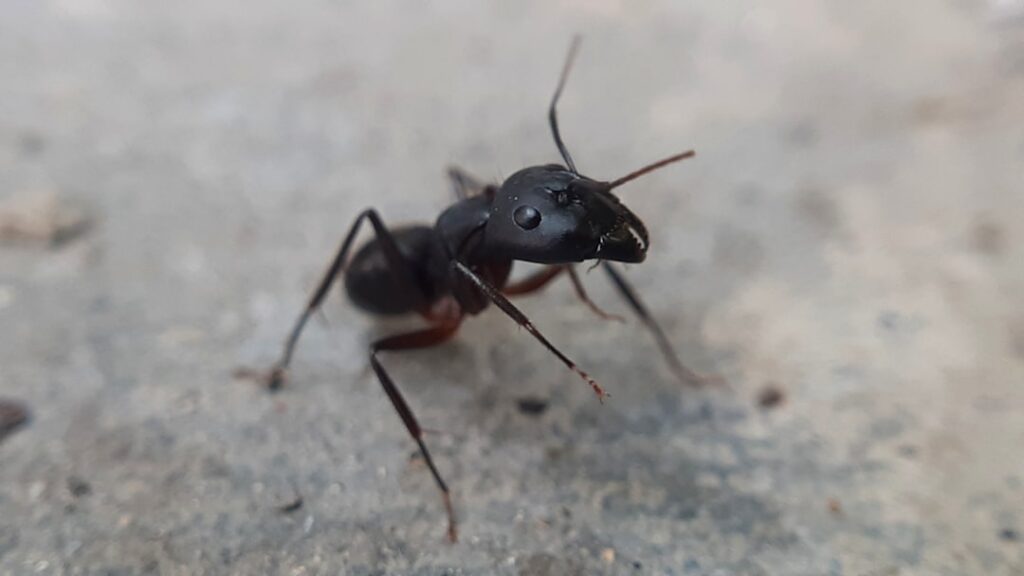
Unstoppable Army Ants: Eciton burchellii’s Incredible Power
Eciton burchellii, commonly known as the Brazilian army ant, is a species of nomadic ant that belongs to the subfamily Formicinae. This species is primarily found in the tropical rainforests of Central and South America, where it plays a significant role in the ecosystem. Characterized by its aggressive foraging behavior and complex social structure, Eciton burchellii has garnered attention from researchers and naturalists alike. The species is notable for its unique lifestyle, which involves large-scale migrations in search of food, making it one of the most fascinating subjects in entomological studies.
The life cycle of Eciton burchellii is marked by a series of distinct phases, including the establishment of colonies, foraging, and reproduction. These ants are known for their ability to form massive swarms that can consist of thousands to millions of individuals. Their collective behavior and organization are key to their survival and success as a species. Understanding Eciton burchellii provides insights into the complexities of social insects and their interactions within ecosystems.
Army ants, particularly Eciton burchellii, are fascinating creatures known for their aggressive foraging behavior and complex social structures. For those interested in learning more about these remarkable insects and their ecological significance, you can explore a related article that delves into their unique characteristics and behaviors. To read more, visit this article.
Key Takeaways
- Eciton burchellii is a highly organized army ant species known for its complex social structure and coordinated behavior.
- Their massive swarms can overwhelm prey through sheer numbers and strategic hunting techniques.
- These ants play a crucial role in ecosystems by controlling insect populations and influencing biodiversity.
- Eciton burchellii employs effective defense mechanisms to protect their colonies from predators.
- Conservation efforts are essential to preserve their habitats and maintain ecological balance.
Army Ant Behavior and Social Structure
Eciton burchellii exhibits a highly organized social structure that is typical of many ant species but is particularly pronounced in army ants. The colony is composed of a queen, workers, and brood, with each group fulfilling specific roles. The queen’s primary function is reproduction, while the workers are responsible for foraging, nest maintenance, and caring for the young. This division of labor enhances the efficiency of the colony, allowing it to thrive in its competitive environment.
The behavior of Eciton burchellii is characterized by its nomadic lifestyle. Unlike many ant species that establish permanent nests, these army ants move frequently in search of food. Their migrations can cover significant distances, and during these movements, they form long, organized columns that can stretch for hundreds of meters. This behavior not only facilitates efficient foraging but also serves as a defense mechanism against predators. The sheer number of ants in a swarm can deter potential threats, showcasing the power of collective behavior in ensuring the survival of the colony.
The Power of Eciton burchellii’s Swarm
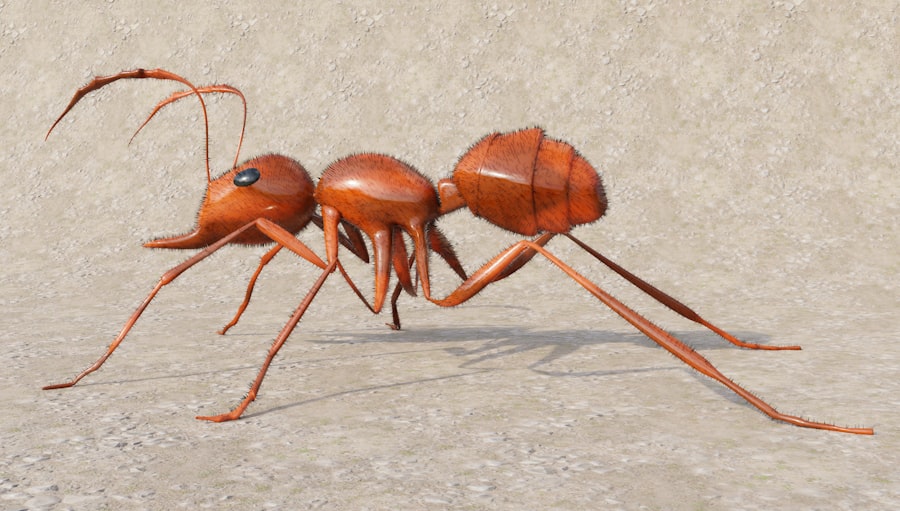
The swarm behavior of Eciton burchellii is one of its most remarkable features. When foraging, these ants move in synchronized formations that allow them to cover vast areas quickly and efficiently. This collective movement is not random; it is guided by pheromonal communication, which helps ants navigate and coordinate their actions.
The ability to form such large swarms enables Eciton burchellii to exploit a variety of food sources, including insects and other small animals. The power of the swarm extends beyond mere numbers. The coordinated efforts of thousands of ants working together can overwhelm prey and outcompete other scavengers in their environment.
This strategy not only increases their chances of successful hunts but also allows them to adapt to changing conditions in their habitat. The dynamic nature of their swarming behavior exemplifies the advantages of social living among insects and highlights the evolutionary benefits that such strategies confer.
Eciton burchellii’s Hunting Techniques
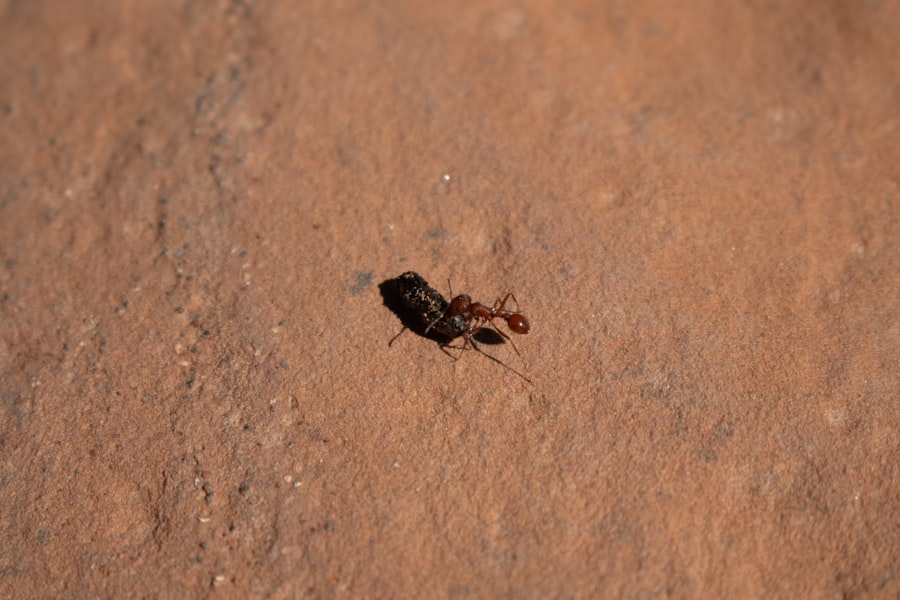
Eciton burchellii employs a range of hunting techniques that reflect its adaptability and efficiency as a predator. One notable method is the use of mass raids, where large groups of ants converge on a specific area to capture prey. During these raids, workers utilize their powerful mandibles to subdue insects and other small animals. The sheer force and coordination displayed during these hunts can lead to rapid success, as the ants work together to immobilize and transport their catch back to the colony.
In addition to mass raids, Eciton burchellii also engages in opportunistic foraging. This involves scouting for food sources as they move through their environment. Workers will often leave pheromone trails to mark successful foraging routes, which helps guide other ants to food locations. This combination of aggressive raiding and opportunistic foraging allows Eciton burchellii to maximize its food intake while minimizing energy expenditure, demonstrating an effective balance between risk and reward in their hunting strategies.
Army ants, particularly Eciton burchellii, are fascinating creatures known for their aggressive foraging behavior and complex social structures. These ants exhibit a unique nomadic lifestyle, moving in large colonies and consuming everything in their path. For those interested in learning more about the intricate dynamics of army ant colonies and their ecological impact, you can explore a related article that delves deeper into their behavior and habitat. To read more, check out this informative piece on Animal Kingdom.
Eciton burchellii’s Impact on Ecosystems
| Metric | Value | Details |
|---|---|---|
| Scientific Name | Eciton burchellii | Species of army ant found in Central and South America |
| Colony Size | Up to 700,000 individuals | Large colonies with multiple castes |
| Worker Size | 3 to 12 mm | Includes minor and major workers |
| Foraging Behavior | Nomadic swarm raids | Highly coordinated group hunting |
| Diet | Insects and other arthropods | Predatory, consuming a wide range of prey |
| Habitat | Tropical rainforests | Primarily leaf litter and forest floor |
| Reproductive Cycle | Alternates between nomadic and statary phases | Nomadic phase lasts about 2 weeks, statary about 3 weeks |
| Queen Size | Up to 20 mm | Physogastric queen with enlarged abdomen |
| Communication | Chemical pheromones | Used for coordination during raids and colony activities |
The ecological role of Eciton burchellii extends beyond its immediate interactions with prey. As a keystone species in tropical ecosystems, these army ants significantly influence the structure and dynamics of their habitats. Their foraging activities help control insect populations, preventing any single species from becoming overly dominant. This predatory behavior contributes to maintaining biodiversity within their ecosystems.
Moreover, Eciton burchellii plays a role in nutrient cycling. As they hunt and scavenge, they contribute to the decomposition process by breaking down organic matter and redistributing nutrients throughout the forest floor. Their movements can also disturb leaf litter and soil, promoting aeration and enhancing plant growth. In this way, Eciton burchellii not only impacts other organisms but also contributes to the overall health and sustainability of its environment.
Defense Mechanisms of Eciton burchellii
Eciton burchellii has developed several defense mechanisms to protect itself from predators and threats.
One primary strategy is their sheer numbers; the presence of thousands of ants can deter potential attackers simply through intimidation.
Additionally, when threatened, these ants can exhibit aggressive behaviors such as biting or stinging, using their mandibles and venomous stingers to defend themselves and their colony.
Another important aspect of their defense is their ability to communicate effectively through pheromones. When danger is detected, alarm pheromones are released, prompting workers to mobilize quickly in defense of the colony. This rapid response system allows them to react swiftly to threats, whether from larger predators or rival ant species. The combination of numerical strength and effective communication underscores the resilience of Eciton burchellii against various challenges in their environment.
Eciton burchellii in Human Culture and History
Eciton burchellii has captured the interest of humans for centuries, both as a subject of scientific study and as a cultural symbol in various societies. Indigenous peoples in regions where these ants are found have long recognized their significance in local ecosystems and have incorporated them into folklore and traditional practices. The impressive swarming behavior has often been likened to military formations, leading to comparisons with human armies.
In modern times, researchers have studied Eciton burchellii extensively to understand social behavior, communication, and ecological impact. Their complex social structures provide valuable insights into evolutionary biology and the dynamics of cooperation among social insects. As scientists continue to explore the intricacies of this species, Eciton burchellii remains an important subject in both academic research and popular science literature.
Conservation of Eciton burchellii and Its Habitats
The conservation status of Eciton burchellii is closely tied to the health of its tropical rainforest habitats. Deforestation, habitat fragmentation, and climate change pose significant threats to these ecosystems, impacting not only army ants but also countless other species that share their environment. Protecting these habitats is crucial for maintaining biodiversity and ensuring the survival of Eciton burchellii.
Conservation efforts aimed at preserving tropical rainforests often include measures such as establishing protected areas, promoting sustainable land use practices, and raising awareness about the importance of biodiversity. By focusing on habitat conservation, it is possible to safeguard not only Eciton burchellii but also the myriad species that depend on these ecosystems for survival. As research continues to highlight the ecological significance of army ants like Eciton burchellii, it becomes increasingly clear that their conservation is essential for maintaining healthy ecosystems worldwide.
FAQs
What is the Army Ant (Eciton burchellii)?
The Army Ant (Eciton burchellii) is a species of aggressive, nomadic ants found primarily in Central and South America. They are known for their large colonies and coordinated foraging behavior, often forming massive raiding swarms.
Where do Army Ants (Eciton burchellii) live?
Eciton burchellii typically inhabit tropical rainforests in Central and South America. They build temporary nests called bivouacs using their own bodies and move frequently in search of food.
How do Army Ants (Eciton burchellii) hunt for food?
Army Ants hunt in large, organized groups that swarm over the forest floor, preying on other insects, small animals, and arthropods. Their coordinated raids overwhelm prey through sheer numbers and speed.
What is unique about the behavior of Army Ants (Eciton burchellii)?
One unique behavior of Eciton burchellii is their nomadic lifestyle, alternating between stationary phases where they form bivouacs and nomadic phases where they move daily to find food. They also exhibit complex social organization and division of labor.
Are Army Ants (Eciton burchellii) dangerous to humans?
While Army Ants can deliver painful bites, they are not typically dangerous to humans. They generally avoid human contact and their bites are more of a nuisance than a serious threat.